_1763189649816-DnTr_C2d.png)
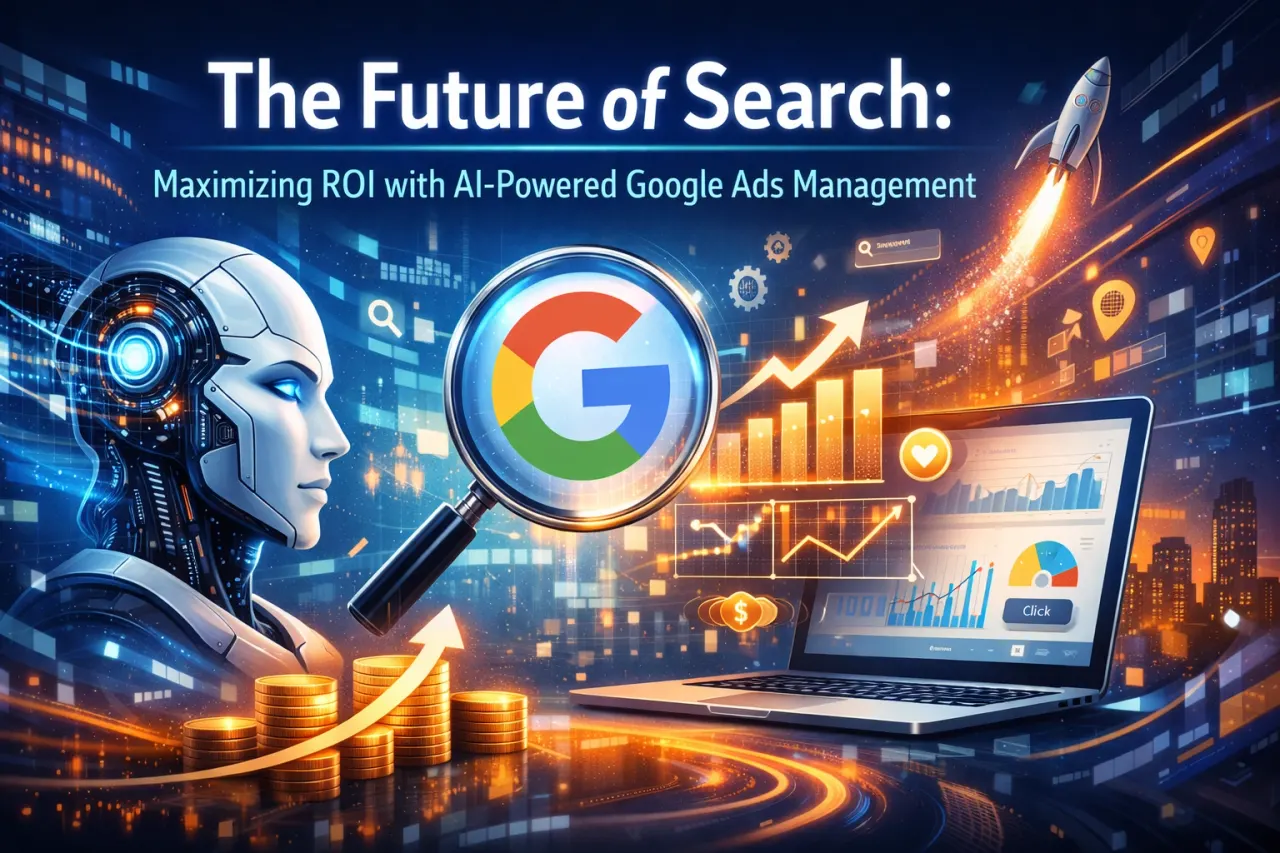
The Future of Search: Maximizing ROI with AI-Powered Google Ads Management
The search advertising landscape is undergoing its most significant transformation since the introduction of pay-per-click itself. AI-powered Google Ads management isn't just an incremental improvement: it's a fundamental restructuring of how campaigns are built, optimized, and scaled.
The search advertising landscape is undergoing its most significant transformation since the introduction of pay-per-click itself. AI-powered Google Ads management isn't just an incremental improvement: it's a fundamental restructuring of how campaigns are built, optimized, and scaled.
Organizations leveraging AI in their Google Ads strategy are reporting 10-27% performance improvements compared to traditional manual methods. For businesses still relying exclusively on manual campaign management, the competitive gap is widening rapidly.
The Performance Gap: AI vs. Manual Management
Let's start with hard data. Advertisers activating Google's AI Max feature in Search campaigns are seeing 14% more conversions at similar cost-per-acquisition ratios. For campaigns transitioning from exact and phrase match keywords to AI-optimized broad match strategies, improvements reach 27%.
Beyond Search, Google's AI-powered video campaigns on YouTube deliver 17% higher return on ad spend than manually managed campaigns. These aren't marginal gains: they represent substantial competitive advantages that compound over time.

The most dramatic improvements appear in audience targeting precision. AI identifies patterns in potential customers that go far beyond basic demographic data, analyzing web browsing behavior, engagement signals, and purchase intent indicators in real time. This results in:
- 50% increase in click-through rates
- 30% improvement in conversion rates
- 40% boost in overall ROI
- 30% reduction in wasted ad spend through better targeting
How AI Solutions Stack for Maximum Impact
The real magic happens when businesses combine multiple AI ad solutions strategically. Broad Match alone delivers 15% higher ROAS and 10% higher sales effectiveness. Add Performance Max on top of your Search strategy, and you're looking at an additional 8% higher ROAS and 10% higher sales effectiveness.
Layer in AI-powered Demand Gen campaigns alongside Search and Performance Max, and the results become even more compelling: 10% higher ROAS and 12% higher sales effectiveness. Each AI feature drives distinct performance benefits, and when combined thoughtfully, they unlock the best balance of reach, efficiency, and returns.
Real-Time Optimization at Machine Speed
Traditional Google Ads management operates on human time scales: weekly reviews, manual bid adjustments, periodic keyword analysis. AI operates in milliseconds, making thousands of micro-optimizations per day that would be impossible for human managers to execute.
Google's Smart Bidding analyzes multiple signals simultaneously: time of day, device type, location, user behavior, and dozens of other factors: to optimize bids in real time. This ensures maximum budget efficiency without the need for constant human monitoring.

These systems operate continuously, monitoring campaigns 24/7 and alerting advertisers to suspicious activity or unexpected spend spikes immediately. Rather than discovering problems after the fact during your weekly review, you catch issues in real time.
The Hybrid Model: AI Execution + Human Strategy
The most successful Google Ads strategies combine AI optimization with sophisticated human oversight. AI handles execution: the thousands of micro-decisions that optimize performance at scale. Human strategists handle goal-setting, creative direction, audience insights, and ethical implementation.
This isn't about replacing marketers. It's about elevating their role from repetitive execution to strategic thinking. While AI manages bid adjustments and budget allocation, skilled marketers focus on campaign goals, creative development, and interpreting insights to drive business growth.

At High Priority Marketing, we've seen clients reduce their cost-per-acquisition by 45% while simultaneously doubling qualified conversions through this AI-powered, strategically guided approach.
Creative Optimization Through Ad Strength
AI doesn't just optimize bids and budgets: it also improves ad performance through creative recommendations. Google's Ad Strength feature analyzes your responsive search ads and provides specific suggestions to improve their effectiveness.
The impact is measurable: advertisers improving their Ad Strength rating from "Poor" to "Excellent" observe 12% more conversions on average. AI evaluates headline variety, description relevance, keyword inclusion, and ad uniqueness to help you craft more compelling ads.
Implementation Strategy: Making the Transition
Shifting to AI-powered Google Ads management isn't an overnight switch. It requires strategic implementation:
- Start with AI Max: Activate it with a single checkbox in your Google Ads account: it's accessible even without large marketing departments.
- Enable Smart Bidding: Begin with automated bidding on lower-risk campaigns to build confidence in AI optimization.
- Implement Performance Max: Let AI automate budget allocation across search, display, and YouTube channels.
- Layer Additional Solutions: Add Broad Match and Demand Gen campaigns strategically once your foundation is solid.
- Monitor Performance: Use real-time alerts to catch issues immediately rather than waiting for weekly reviews.
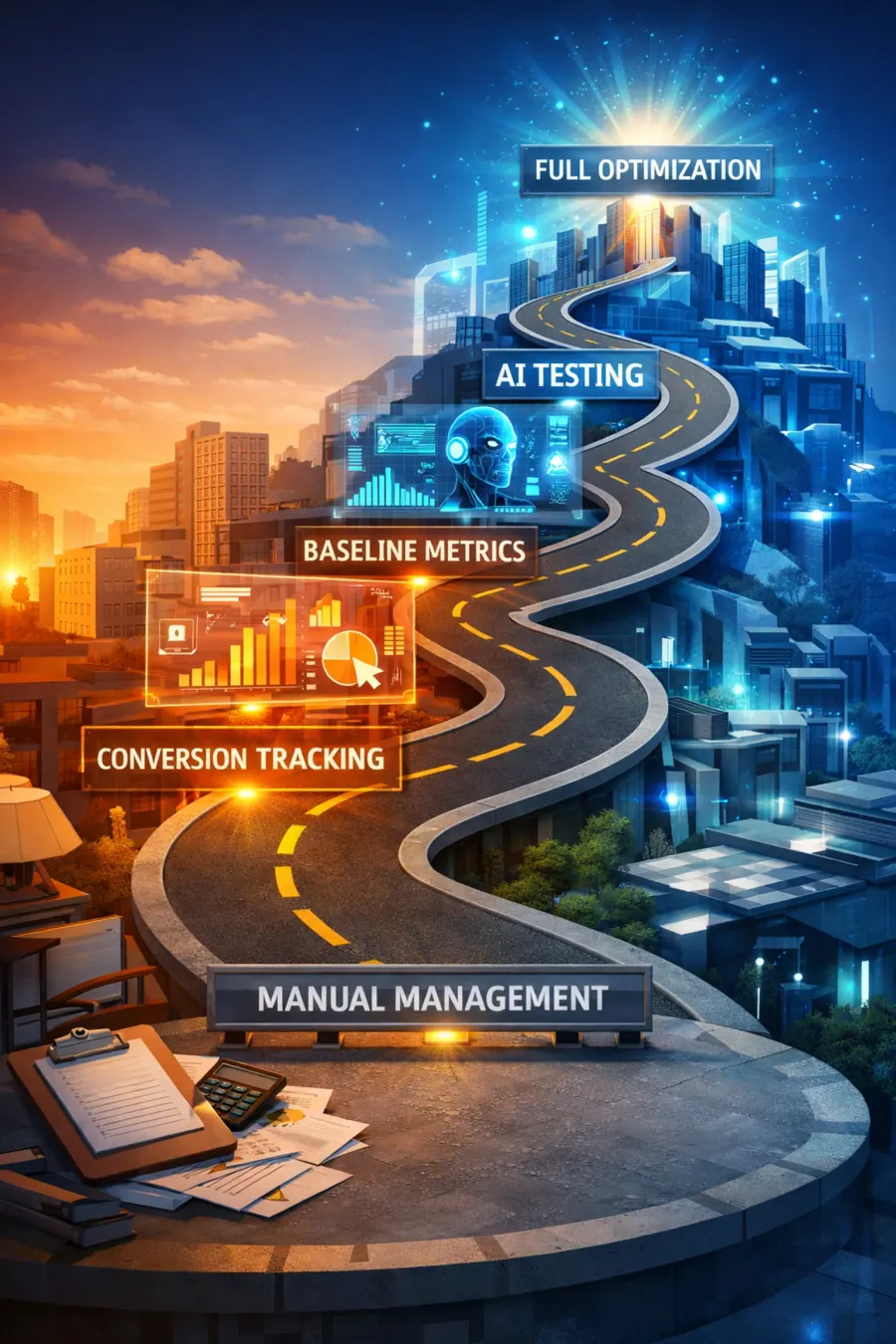
The goal isn't to eliminate human involvement: it's to amplify human strategic thinking with machine execution capabilities.
Cost Efficiency and Time Savings
AI-powered tools deliver campaign optimization in minutes compared to hours of manual research and analysis. By eliminating wasted spend on irrelevant keywords and unqualified traffic, AI ensures every advertising dollar works harder.
Beyond budget efficiency, there's a significant time advantage. Tasks that once took hours now happen automatically, freeing your team to focus on strategy, creative development, and business growth initiatives that truly move the needle.
The Competitive Imperative
AI-powered search advertising represents a genuine competitive advantage today. In 12-18 months, it will be table stakes. The performance gap between AI and manual optimization continues widening: AI-powered Search has shown 10% improvement in performance within just the past six months.
Organizations that delay adoption aren't just missing optimization opportunities: they're allowing competitors to build increasingly difficult leads in campaign performance and market share.
If your current Google Ads strategy relies primarily on manual management, you're leaving significant performance gains on the table. Contact our team for a comprehensive account audit and learn how AI-powered optimization can transform your results.
About the Author
Charles Williams
· Founder, High Priority MarketingGoogle Ads Specialist · Managing paid search campaigns since 2007
Charles has been managing Google Ads accounts for local service businesses, home services contractors, and B2B companies since 2007. He has worked with Fortune 500 brands including CarMax, Adobe, and Citrix, and founded High Priority Marketing to give smaller businesses access to that same level of strategic depth without the overhead that drives up costs and slows things down.
highprioritymarketing.com →Ready to get started?
Learn more about our services and how we can help your business grow.
Related Articles

Navigating Google Ads Changes: Strategies for Success in 2025
As of November 2025, significant changes in Google Ads algorithm impact performance. Discover actionable strategies to adapt and thrive.
Google's Resilient Search Advertising Revenue Amid AI Disruption
Despite fears of self-disruption, Google's search revenue surged 15% last quarter. Discover how businesses can adapt to this evolving landscape and leverage AI advancements.

Navigating Google Ads with the New AI-Powered Ads Advisor
Explore the new 'Ads Advisor' AI chatbot from Google Ads designed to assist marketers with campaign management. Discover its potential benefits and limitations.