
The Complete Guide to Google Ads for HVAC Companies
How HVAC companies should run Local Services Ads and Search Ads together, cut wasted clicks, and what a repair lead typically costs.

Short answer: HVAC companies get the best results running Local Services Ads and Search Ads together, with tight negative keywords (jobs, training, parts, DIY), ad copy that promises same-day service, and landing pages matched to each service. Expect roughly $40 to $90 per repair lead in many markets, and $3,000 to $5,000 a month to keep two trucks consistently busy.
If you run an HVAC business, you already know the job lives and dies by the phone call. When a homeowner wakes up to a water spot on the ceiling from a leaking coil, or the heat cuts out on the coldest night of the year, they are not browsing around for ideas. They are going straight to Google and typing things like "AC repair near me" or "emergency furnace service". That is high-intent traffic, and if you are not showing up right then, someone else is taking that call.
In the real world, the first sign your Google Ads setup is off is the dashboard looking busy but the schedule staying quiet. You will see spend pacing hard early in the month, clicks coming in, and maybe a few form fills, but the calls are either weak or completely unrelated. A common one is the search terms report full of "HVAC jobs", "apprenticeship", "training", "certificate", or "parts". Another common one is the map showing your ads lighting up outside your service area because a setting got left too open. This guide breaks down how to tighten that up so your budget goes toward booked work, not random traffic.
Understanding the Two Pillars of HVAC Search
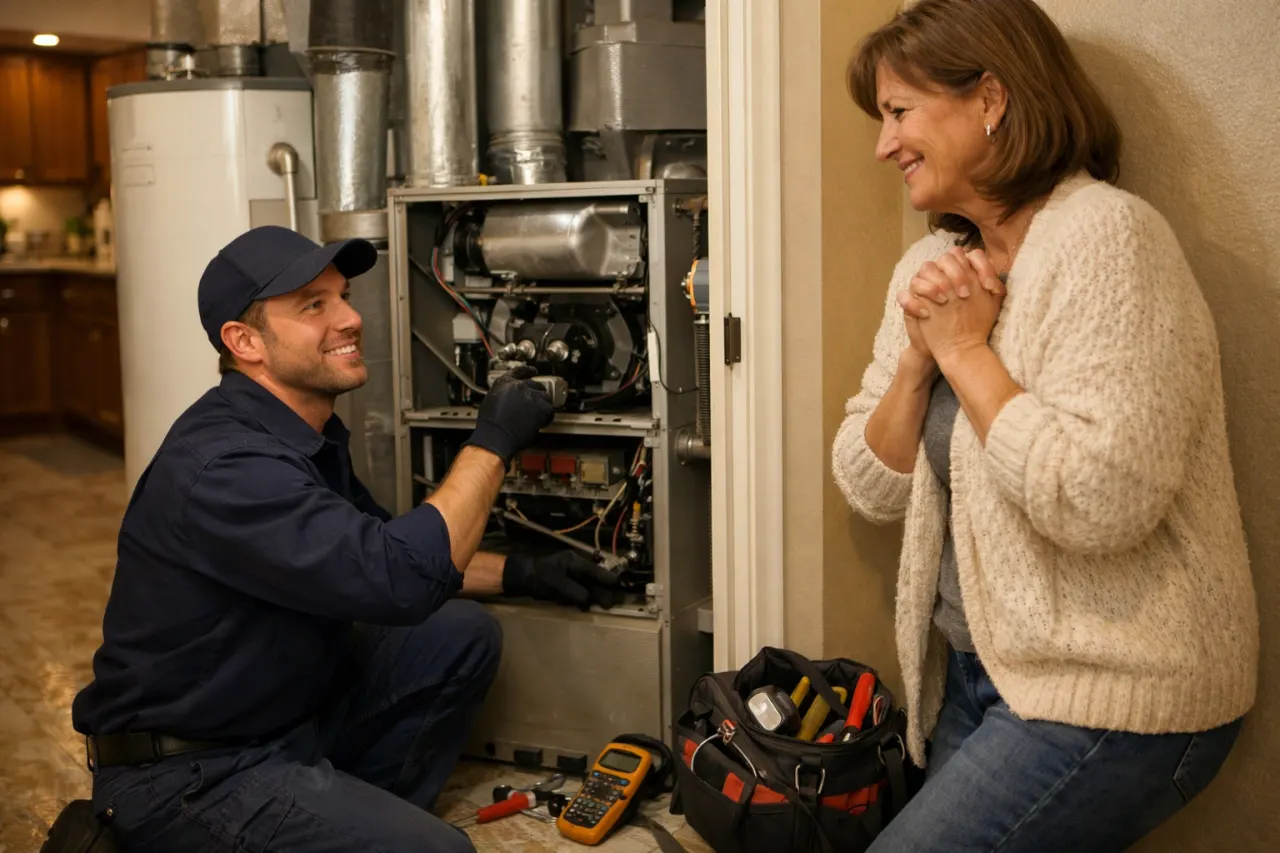
When you look at a Google search results page today, it is crowded. For an HVAC contractor, there are two main places to show up at the top, and in most markets you want both running together. The first is Local Services Ads, often called LSAs, and formerly known as Google Guaranteed. These show as a block at the very top with your business name, reviews, and the green check. The second is traditional Google Search Ads, which show right under LSAs. Search Ads give you more control over what you say and what you target, which matters when you are trying to steer spend toward the jobs you actually want.
LSAs are attractive because they are pay-per-lead. You pay when someone calls or messages through the platform. The tradeoff is control. You cannot really steer LSAs by keyword the same way you can with Search Ads. Search Ads let you bid on specific services and intent, like "ductless mini split installation" or "commercial chiller repair", instead of hoping Google connects the dots. If you want the deeper version of how we structure HVAC accounts and reporting, you can check out our HVAC Google Ads service.
The Trap of Broad Keywords and Negative Keyword Lists
The fastest way to light money on fire in HVAC ads is going too broad and not watching search terms. If you bid on something like "AC", you will pay for window units, DIY content, manuals, and plenty of weird stuff that has nothing to do with a service call. In a market where a click can easily be 30 to 40 dollars, you cannot afford to buy curiosity. You want problem-based searches. The difference between someone searching "HVAC" and someone searching "24 hour emergency AC repair" is night and day.
This is where negative keywords earn their keep. In a working account, you will usually see negatives like jobs, salary, school, training, parts, DIY, manual, and wholesale getting added constantly. The dashboard symptom when this is missing is simple. Your CTR might look decent, your spend looks active, but your lead quality is garbage. Make it a weekly habit to review the actual search terms that triggered ads and cut out anything that does not turn into revenue.
Targeting the Right Services for the Right Season
Seasonality is the heartbeat of HVAC. If you run the same messaging in April that you run in July, you are leaving money on the table. When it is mild out and repair urgency drops, that is when maintenance, IAQ, and replacement messaging can keep leads steady. The other mistake that shows up in dashboards is the stop-and-go pattern where campaigns get paused in slower months, then you have to claw your way back in peak season with higher CPCs and cold data. We broke that down in why pausing HVAC ads in December.
Winning with Ad Copy that Speaks to Urgency and Trust
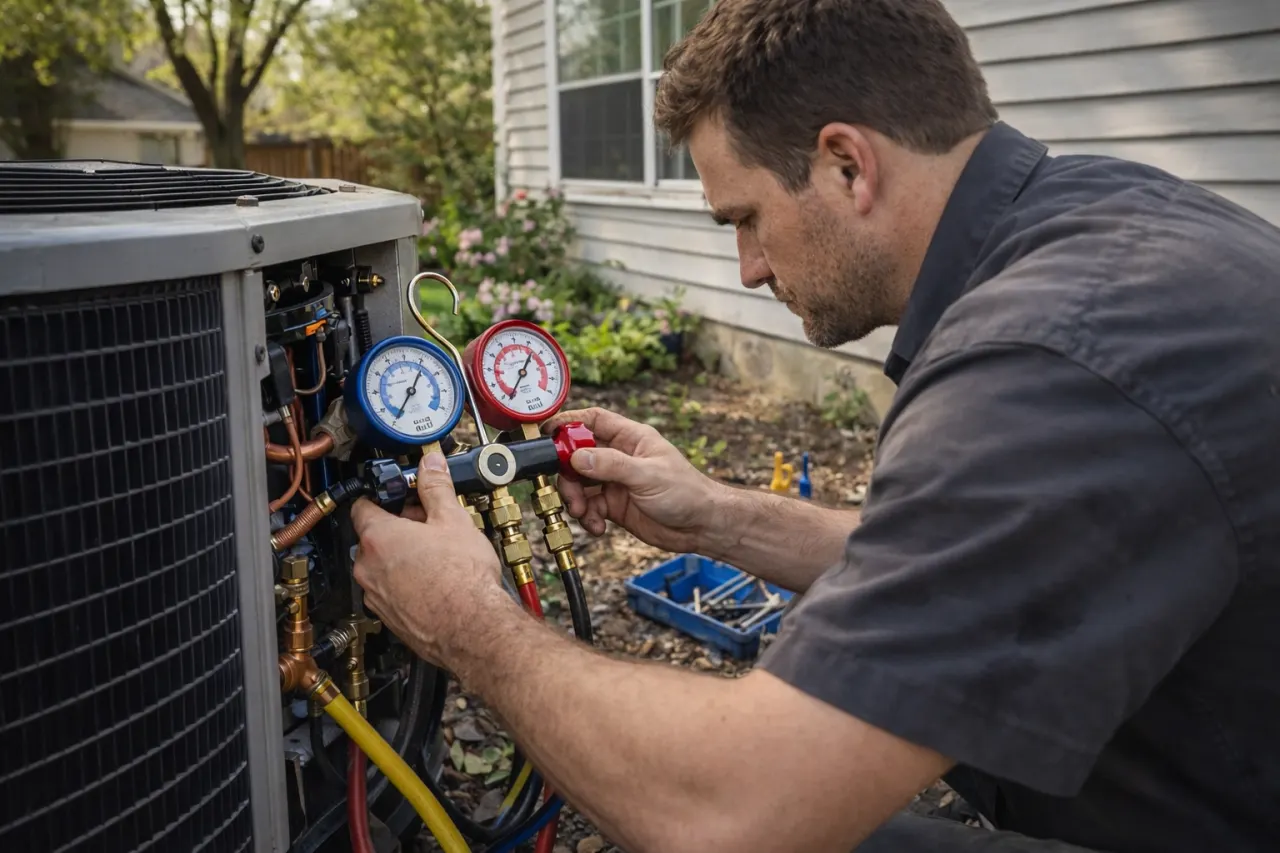
HVAC ad copy has a short job description. It needs to say "we can fix this today" and "you can trust us in your home". When you look at accounts that are underperforming, the ad copy is often generic. It reads like every other contractor on the page, so you end up paying for clicks that are basically coin flips. Practical language tends to win, things like same-day service, licensed and insured, upfront pricing, and emergency availability. Then you back it up with the right extensions so people can act fast, especially call extensions and location extensions.
Offers help when they are simple. "50 dollars off repair" or "free service call with repair" gives someone a reason to pick you right now instead of saving the tab and calling later. If you want examples that work well for local lead gen, this post on ad copy that converts is a solid reference.
The Landing Page is Where the Sale Happens
You can have a clean campaign and still lose if you send paid traffic to a cluttered homepage. The landing page should match the intent of the ad. If the ad is for emergency furnace repair, the page should be about furnace repair with a big phone number at the top, tight service area info, reviews, and a fast path to schedule. When this is wrong, you will see the problem in the numbers. Clicks look fine, time on site is low, and users bounce back to Google and call the next company.
Small conversion rate changes add up fast. If you spend 1,000 dollars and get 50 visitors, a 5 percent conversion rate is about 2 to 3 leads. If you get that page to 15 percent, now you are around 7 to 8 leads on the same spend. In HVAC, that can be the difference between a campaign that feels expensive and a campaign you want to scale. Mobile matters most because emergency searches are usually done with a phone in one hand and a problem in the house. If the page loads slowly or the call button is annoying to tap, you are paying for the privilege of sending people back to your competitor. If you want a deeper CRO breakdown, this post on conversion rate optimization is worth a read.
Realistic Budgeting and Expectations
Budget questions come up constantly, and the honest answer is "it depends", but there are patterns. In many markets, you might see 40 to 90 dollars per lead for repair, and more for replacement intent. If you are trying to keep two trucks consistently busy, you are often in the 3,000 to 5,000 per month range. Bigger shops can easily spend 20,000 per month if the tracking is tight and close rates support it. The number that actually matters is cost per acquired customer. If you know your close rate and average job value, the math gets simple, and your decisions get calmer.
Also, Google Ads is not a set-it-and-forget-it channel. You will see CPC swings, competitor surges, and performance shifts based on weather and season. In the dashboard, that shows up as impression share dropping, CPCs creeping up, or conversions flattening even though spend is steady. That is the moment to adjust targeting, tighten queries, and make sure the service area and schedules match reality. If you want help specifically with HVAC campaigns, this page lays out the approach: HVAC Google Ads.
If you want a second set of eyes on your account, start with a quick review instead of guessing for another month. Get a free, no-obligation audit at https://highprioritymarketing.com/hvac-google-ads. If you are ready to talk HVAC Google Ads management specifically, you can also reach us here: https://highprioritymarketing.com/hvac-google-ads.
Quick Answers
About the Author
Charles Williams
· Founder, High Priority MarketingGoogle Ads Specialist · Managing paid search campaigns since 2007
Charles has been managing Google Ads accounts for local service businesses, home services contractors, and B2B companies since 2007. He has worked with Fortune 500 brands including CarMax, Adobe, and Citrix, and founded High Priority Marketing to give smaller businesses access to that same level of strategic depth without the overhead that drives up costs and slows things down.
highprioritymarketing.com →Find Out Where Your Google Ads Budget Is Leaking
Get a free audit of your Google Ads account. I review it myself and show you exactly where spend is being wasted and what to fix first.
Get Your Free AuditReady to get started?
See the services I offer and how I can help your business grow.