_1763189649816-DnTr_C2d.png)
AI-Powered Audience Insights: Finding Your Best Customers with Machine Learning
Here's the uncomfortable truth: you're probably spending a significant chunk of your ad budget talking to people who will never become customers. Not because your product is bad or your ads are boring, but because you're casting a net into the wrong part of the ocean.
Here's the uncomfortable truth: you're probably spending a significant chunk of your ad budget talking to people who will never become customers. Not because your product is bad or your ads are boring, but because you're casting a net into the wrong part of the ocean.
Traditional audience targeting relies on demographics and surface-level behaviors. "Women aged 25-45 who like yoga" sounds specific until you realize that describes roughly 40 million people with wildly different purchase intentions, budgets, and actual interest in what you're selling.
AI-powered audience insights flip this entire approach on its head. Instead of guessing based on broad categories, machine learning analyzes thousands of data points to identify patterns that reveal who your actual best customers are: and where to find more people just like them.
Why Your Gut Instinct About Your Audience is Probably Wrong
Most businesses think they know their ideal customer. "We target small business owners between 30-50 who need our services." Cool story. But AI often uncovers patterns that completely contradict those assumptions.
Machine learning algorithms digest data from your CRM systems, website analytics, social media engagement, purchase histories, device usage, and dozens of other sources. They spot correlations humans simply can't see because we're not wired to process that volume of information simultaneously.

The result? You might discover your highest-converting customers aren't who you thought they were at all. Maybe they're younger than expected, engage with content on different platforms, or share unexpected interests that create new targeting opportunities.
This is where ai marketing agency expertise becomes invaluable: not just implementing AI tools, but interpreting what they reveal and adjusting strategy accordingly.
How Machine Learning Spots Your Best Customers in the Crowd
AI doesn't just segment audiences by basic demographics. It uses predictive modeling to identify people most likely to convert, engage deeply, or become long-term customers. Here's how it works:
- Sentiment Analysis: AI processes text from reviews, social media comments, and customer service interactions to gauge emotional tone toward your brand or products. It doesn't just count mentions: it understands whether people are excited, frustrated, or indifferent.
- Topic Detection: Machine learning identifies recurring themes in customer conversations that reveal what your audience genuinely cares about, not what you assume they care about.
- Behavioral Pattern Recognition: AI tracks how users interact with content, their browsing habits, device preferences, and purchase timing to create detailed behavioral profiles.
- Predictive Segmentation: Historical data analysis predicts future customer actions, letting you focus resources on high-probability opportunities rather than spreading budgets thin across everyone.
The magic happens when these insights feed directly into your google ads optimization strategy, allowing Google's AI to target with surgical precision rather than broad strokes.
Beyond "Women 25-45": Advanced Segmentation That Actually Works
Modern audience insights platforms create segments based on psychographics, behaviors, interests, and social interconnections. You're not just targeting "homeowners": you're targeting "eco-conscious homeowners who follow sustainable living influencers and engage with DIY content on weekends."
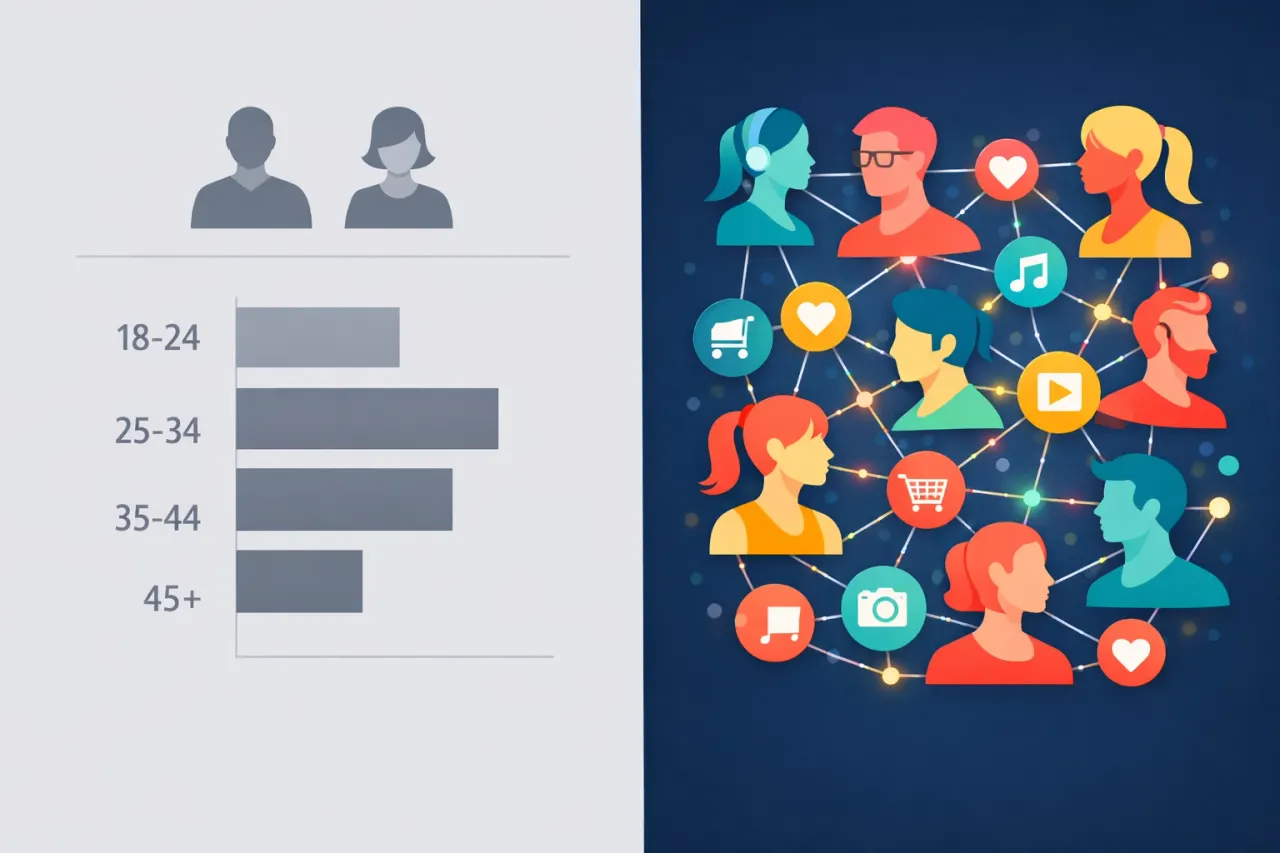
This level of specificity transforms campaign performance. Instead of competing for generic audiences where everyone's bidding, you identify niche segments with lower competition and higher conversion potential.
Key segmentation approaches include:
- Interest and Affinity Analysis: Identifying shared interests beyond your product category. Your best customers for lawn care services might also be avid gardeners, home improvement enthusiasts, or even amateur landscaping hobbyists.
- Interconnectivity Mapping: Analyzing relationships within your audience to identify influencers and community structures. Who are the hubs your ideal customers orbit around?
- Dynamic Behavioral Segments: Groups that automatically update as customer behaviors evolve. If someone starts engaging with fitness content, they're added to health-conscious segments without manual intervention.
- Custom Lookalike Audiences: AI identifies patterns in your best existing customers and finds thousands of similar prospects across Google's network.
This isn't just theoretical. Businesses leveraging AI-powered segmentation in their ppc management services report 30-40% improvements in conversion rates simply because they're finally talking to the right people.
Real-Time Optimization: When Your Audience Strategy Never Sleeps
Here's where AI really leaves manual targeting in the dust: continuous learning and adaptation. Traditional audience strategies get built, launched, and maybe reviewed monthly if you're diligent. AI updates constantly.
Modern platforms provide dynamic dashboards that refresh in near real-time as customer behaviors shift. If emerging trends appear in your audience data, AI spots them immediately and adjusts targeting parameters before competitors even notice the change.
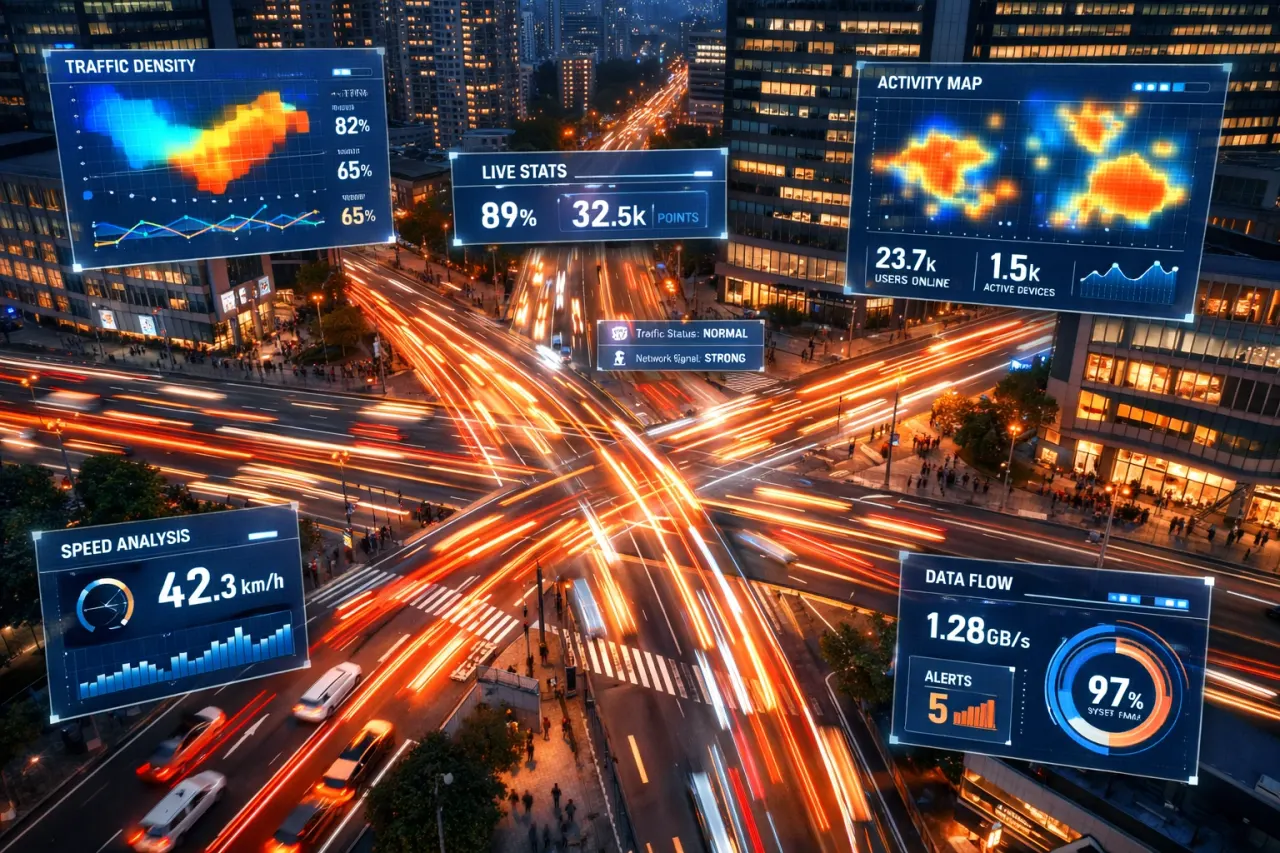
Anomaly detection algorithms flag unusual patterns: sudden spikes in interest from unexpected demographics, shifts in device usage, or changes in conversion patterns that might indicate new opportunities or potential problems.
The predictive capabilities extend beyond current behavior to forecast future trends. AI highlights emerging audience segments before they become mainstream, giving you first-mover advantage in new markets or customer categories.
From Data to Decisions: Making AI Insights Actually Useful
Raw data means nothing if you can't translate it into action. The best AI-powered audience platforms don't just show you patterns: they recommend specific strategic moves.
"Your highest-converting segment over-indexes for mobile evening traffic between 7-9 PM" becomes "Increase mobile bids by 25% during evening hours and test video ad formats for this segment."
These systems learn from your responses too. When you test new ad creative with specific segments and see performance changes, the AI incorporates those results into future recommendations. The longer you use it, the more precisely it understands what works for your specific business.
This creates a virtuous cycle: better targeting leads to better data, which leads to smarter insights, which leads to even more precise targeting. Each campaign iteration becomes more efficient than the last.
The Hybrid Approach: AI Insights + Human Strategy
Let's be clear about what AI can and can't do. It's exceptional at processing vast amounts of data and identifying patterns. It's terrible at understanding business context, brand positioning, and strategic priorities.

The winning approach combines AI's pattern-recognition capabilities with human strategic thinking. AI tells you who your best customers are and where to find them. You decide how to message them, what offers resonate with your brand positioning, and which opportunities align with business goals.
At High Priority Marketing, we've seen clients reduce their cost-per-acquisition by 35-50% while simultaneously expanding into customer segments they didn't know existed. The key wasn't just implementing AI tools: it was having experienced strategists who knew how to interpret insights and translate them into campaign architecture that actually performs.
Getting Started Without Drowning in Data
You don't need a data science degree to benefit from AI-powered audience insights. Google Ads already incorporates many of these capabilities into its platform:
- Enable Audience Expansion: Let Google's AI find new segments similar to your current converters
- Activate Optimized Targeting: Allow AI to target beyond your manually selected audiences when it identifies better opportunities
- Use Observation Mode First: Apply audience segments in observation mode to gather insights before committing budget
- Monitor Audience Reports: Review demographic, geographic, and device data to spot patterns in your best performers
- Test Custom Segments: Create segments based on specific URLs visited, apps used, or search behaviors and let AI optimize within them
The goal isn't to hand everything over to AI blindly. It's to use machine learning as a sophisticated research assistant that processes data you couldn't analyze manually, then apply human judgment to translate insights into winning campaigns.
Why This Matters More Every Quarter
As privacy regulations tighten and third-party cookie tracking disappears, first-party data and AI-powered insights become even more critical. Businesses that master this approach now build competitive advantages that compound over time.
Your competitors are either already using these tools or will be soon. The question isn't whether to adopt AI-powered audience insights: it's whether you do it strategically or play catch-up while watching market share erode.
If your current Google Ads strategy still relies primarily on demographic targeting and manual audience selection, you're leaving substantial performance gains on the table. Contact our team for an audience analysis and discover who your best customers actually are: not who you assume they might be.
About the Author
Charles Williams
· Founder, High Priority MarketingGoogle Ads Specialist · Managing paid search campaigns since 2007
Charles has been managing Google Ads accounts for local service businesses, home services contractors, and B2B companies since 2007. He has worked with Fortune 500 brands including CarMax, Adobe, and Citrix, and founded High Priority Marketing to give smaller businesses access to that same level of strategic depth without the overhead that drives up costs and slows things down.
highprioritymarketing.com →Ready to get started?
Learn more about our services and how we can help your business grow.
Related Articles
Landing Page CRO: Why You’re Getting Clicks But Zero Phone Calls
It is 9:02 AM on a Monday morning. You are a business owner, perhaps a plumber or an HVAC contractor, and you have just settled into your office with a fresh cup of coffee. You open your Google Ads dashboard to see how the day is starting. The numbers look active: you have already spent $500. You se

AI Video Marketing: Why High-Impact Video Ads Are No Longer Just for Fortune 500s
Remember when video marketing was something only the big players could afford? A single 30-second commercial could cost tens of thousands of dollars in production alone, and that's before you even thought about media placement. Small businesses were basically locked out of the video game, unless you